Portable Makeup History from Kohl Vessels to Compacts
Portable makeup history traces how containers shaped grooming routines, from kohl vessels to mirrored compacts, and helps you choose a format for real use.
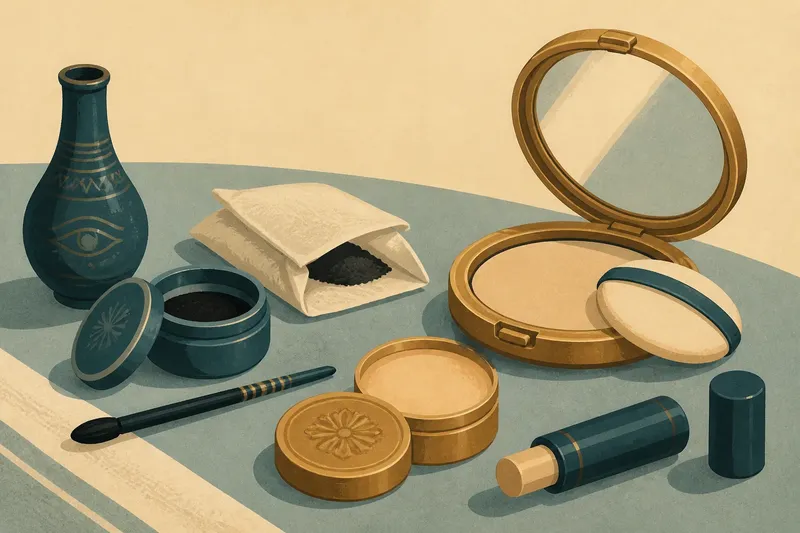
Portable makeup history starts with a practical question: how could someone carry a cosmetic and use it away from a dressing table? Kohl vessels, wrapped pigments, and powder compacts offered different answers. Their forms shaped how a product was stored and handled, though the details varied across cultures and periods.
There was no single path from ancient containers to the familiar compact. People used packages suited to a cosmetic’s texture and the tools available to them. Looking closely at those formats shows how storage and application were connected without reducing history to a simple story of ever-smaller cases.
How did early makeup containers hold cosmetics?
Historical accounts and surviving objects include small vessels for kohl, a dark cosmetic used around the eyes in several cultures. A vessel could contain the material and allow it to be carried. Some forms were used with a separate applicator, so the cosmetic and the tool were distinct parts of the routine.
Loose or finely ground material could spill or collect dirt if left exposed. A lid or stopper helped contain it, but did not solve every practical problem. Applying makeup still called for a suitable tool, enough light, and a steady place to work.
Other cosmetics could be carried in packets or small containers, depending on their form. A solid or semi-solid product might be easier to handle than loose powder, but its package still needed to protect it from pressure and contact with nearby belongings.
A small container made a cosmetic carryable; it did not automatically make application convenient.
What changed when makeup left the dressing table?
A dressing table could bring cosmetics, tools, a mirror, and good light together. Away from home, a person might have to choose which item to bring and find a suitable moment to use it. The container addressed storage, while the setting determined whether careful application was practical.
This distinction helps explain why portable grooming often involved a limited task rather than a full routine. Someone might bring one item for a quick adjustment, then wait until there was a stable place and enough light to use it.
Say a traveler has a small, closed eye cosmetic but no broad surface or steady mirror. She waits until she can sit beside a window, holds a mirror securely, and uses the cosmetic for a small touch-up. The expected visible result is a controlled adjustment in a stable setting, not a complete routine recreated anywhere.
For a precise touch-up, choose a settled moment rather than applying makeup while moving.
Why did the compact combine a mirror and powder?
As pressed powder and personal mirrors became associated with portable grooming, the compact brought useful items together. A hinged case could hold pressed powder, and an interior mirror could reduce the need to carry a separate hand mirror. Some designs also had room for an applicator.
This arrangement made brief checks possible away from a dressing table, but it did not remove the need for adequate light or a comfortable position. The compact’s appeal was practical as well as visual: it organized a cosmetic and part of the application routine in one object.
Some compacts were also personal accessories, with materials or decoration that reflected their owner’s taste. Their use in public settings made grooming visible beyond the home, but the meaning of that practice depended on its particular time and social context. It is safer to describe the compact as a portable grooming object than to claim that one design changed everyone’s routine in the same way.
A compact stores a product and brings a mirror into the same small routine.
Which container fits a portable makeup routine?
Each format involves a different tradeoff between containment, access, and tools. The best fit depends on the product’s texture and where someone expects to use it.
- Small vessel: Check whether the lid closes securely; if it does, carry it with any required applicator, and if it does not, choose a better-sealed container.
- Pressed compact: Check that the powder is intact and the case closes; if both are true, it may suit touch-ups, and if the powder is cracked or the closure loose, use a sturdier option.
- Stick: Check that the cap stays on and the product can be applied directly; if so, it may avoid a separate brush, and if the cap slips or direct application is unsuitable, choose a capped container with a tool.
- Tin or pot: Check whether the product can be reached without smearing the rim; if so, carry a clean applicator if needed, and if access is awkward, choose a stick or another format.
- Wrapped packet: Check whether the wrapping remains closed and the product is meant for repeated handling; if it does, it may suit occasional use, and if not, transfer the product only into a suitable container or leave it at home.
- Mirror case: Check whether the mirror is clean and the hinge stays open; if both are true, it may support a brief check, and if either fails, bring a separate mirror or use a more stable setting.
Imagine someone packing a hypothetical pressed powder compact, a loose applicator, and keys in one handbag. She checks that the compact closes, sees that the powder is intact, and notices the applicator has no sleeve. She places the applicator in a clean pouch, then closes the bag and checks that the compact remains shut. The result is a contained powder and a tool kept apart from the keys; if the closure had failed or the powder had been cracked, she would leave that compact out and choose a secure alternative instead.
Check the closure and the tool before deciding that a format is ready to carry.
What do readers ask about portable makeup history?
Was kohl the first portable makeup?
There is no single starting point for portable cosmetics across all cultures and periods. Kohl vessels are one recognizable example, while other cosmetics also traveled in forms suited to their materials.
Why did compacts include mirrors?
A built-in mirror reduced the need to carry a separate one and could help with a brief check away from home. Light and a steady position still mattered for careful application.
How did earlier makeup cases differ from current packaging?
Many containers were shaped around a particular material and method of use, and some were reusable personal objects. Current packaging also has to contain a product and support its application, though designs vary widely.
Did portable cases make makeup easier to apply anywhere?
No. A case could make storage more convenient, but the user might still need a mirror, an applicator, suitable light, and a settled place. Portability and ease of application are related, not identical.
How can portable makeup history help with packaging choices?
Portable makeup history offers a practical way to judge a product: consider the routine before the case’s appearance. Check whether the package closes, whether the product needs a separate tool, and whether its mirror or applicator suits the intended setting.
Imagine someone choosing between a compact with a mirror and a small pot of cream for a handbag. She checks that the compact’s hinge holds and that its applicator fits inside. She then checks whether the pot would need a separate tool. If she expects to use the product for a brief check away from home, the compact combines more of the routine; if she prefers the cream and can carry a clean applicator, the pot may suit her better. The choice follows from the task, not from which container looks smaller.
The history of portable makeup is about matching a product, its container, and the conditions of use. Before carrying a cosmetic, check its closure, tools, and application setting; those details reveal whether it is practical for the routine you have in mind.