Powder, Cream or Liquid Blush: What Changes Between Formats?
Powder, cream or liquid blush differs in glide, placement and finish; compare how each handles so you can choose a format that feels natural to use.
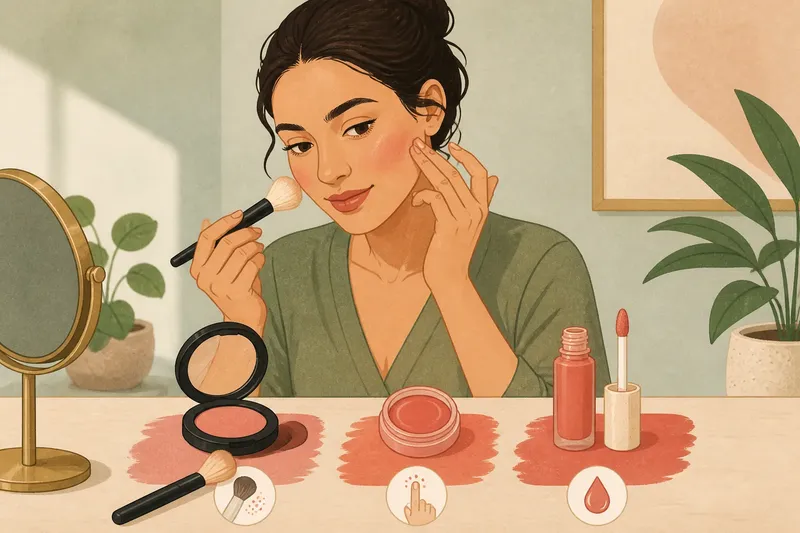
Powder, cream or liquid blush can leave similar-looking color on the cheeks, but the route there feels different: powder is swept or pressed on, cream is worked with fingers or a brush, and liquid often needs quick, deliberate blending. The best format is the one whose texture, handling and finish suit the way you like to apply makeup.
What changes when blush changes format?
Format describes the product’s physical texture and how it is delivered. A pressed powder is made of dry particles held in a compact; cream blush has a soft, pliable consistency; liquid blush flows from a bottle, tube or dropper. Those differences affect how much control you have while applying, how readily color moves across the skin, and what the surface looks like once blended.
Finish is the visible quality left behind. A powder may look soft or velvety, while a cream may retain a subtle sheen. Liquid blush can appear dewy, satin-like or more matte, depending on its formula. These are tendencies, not rules: powders can contain glow, and creams can set with little shine.
Shade and format are separate decisions. A color you like may be available in more than one texture, but the same shade can look more sheer or more concentrated depending on how the product deposits and blends.
How does powder blush behave?
Powder blush is dry, so a brush can pick up a little product and distribute it in light passes. That makes it familiar to anyone who already uses powder makeup, and it can be easy to soften a strong patch by sweeping over its edges. A fluffy brush tends to diffuse color; a smaller, denser brush places it more precisely.
On skin with a powdery or satin finish, blush often blends into the surrounding complexion makeup without much change in surface feel. On bare or visibly dry skin, powder can emphasize flaky areas or sit unevenly, especially if the brush drags. A light hand and a soft brush may help, but the result depends on the formula and the skin’s condition.
Powder suits people who prefer a dry texture, want to build color gradually, or like applying blush with a brush. It may be less appealing if you dislike powder on your skin or want a distinctly dewy look.
Practical point: tap excess powder from the brush before bringing it to the cheek.
What is different about cream blush?
Cream blush is pliable rather than loose or fluid. It can be tapped on with fingertips, pressed with a sponge, or picked up with a brush. The warmth and movement of fingers can help soften the edges, while a brush offers a more familiar tool-based application.
Many cream formulas leave a natural-looking or softly luminous finish, though some become more matte as they settle. Their flexible texture can suit bare skin or complexion products that have not been heavily powdered. A very emollient cream may move around if rubbed after application, so pressing and blending in small motions often gives more control than sweeping.
Cream can suit someone who wants a close-to-skin appearance and enjoys blending with fingers. It may feel too rich for a person who prefers a dry finish, and a compact or pot can be less convenient than a powder compact if keeping hands clean matters.
Practical point: apply a small amount first; adding more is easier than lifting away an overly concentrated patch.
Why can liquid blush feel less forgiving?
Liquid blush flows readily, which can make it easy to dispense too much. A drop, a dab from an applicator, or a thin streak may carry more pigment than expected. Blend promptly with fingertips, a sponge or a brush, using light taps rather than rubbing the color across a wide area.
Liquids vary widely. Some stay fluid long enough for leisurely blending; others begin to set quickly. The finish may be fresh and dewy, or it may dry down to a more natural, low-shine surface. Check how the formula feels on your own skin rather than assuming every liquid behaves alike.
This format can suit someone who wants a thin, flexible layer and is comfortable working in small sections. It may frustrate anyone who wants time to adjust placement or prefers a product that stays creamy while being blended. A controlled applicator and a light starting amount can make handling simpler.
How should you choose a blush format?
Start with the experience you want during application, not with a rule about which format is “best.” Consider these preferences:
- Choose powder if you like a brush, gradual color and a dry or soft-focus feel.
- Choose cream if you enjoy tapping and blending, and prefer a pliable texture that can look close to the skin.
- Choose liquid if you want a fluid formula and are comfortable blending a small amount promptly.
- Consider your base: a product may blend differently over bare skin, foundation or a powder-set complexion.
- Consider the finish: look for words such as matte, satin or dewy, then treat them as clues rather than promises.
Imagine you prefer applying makeup with a soft brush and dislike a tacky feel. You could start with powder, pick up a small amount, and blend it over the cheek; the observable result to look for is an even wash of color without a lingering creamy sensation. If the finish looks too dry, trying a cream with a softer sheen may be more useful than choosing a brighter shade.
For a practical comparison, use a similar amount of color in the same cheek area, with a clean tool or fingertip for each format. Notice how much blending time you prefer, whether the edges soften easily, and how the finish looks beside the rest of your makeup. This is a preference check, not a test with a universal winner.
Which blush format answers your application questions?
Can you use cream blush over powder?
You can, but a creamy texture may catch on or disturb a powdery base. Pressing it on gently with a fingertip or sponge can be more controlled than rubbing; if the surface becomes patchy, try using the cream before powder next time.
Can liquid blush be applied with a brush?
Yes. A small synthetic brush can spread liquid blush, while a sponge or fingertip can soften the edges. Start with a little product on the tool rather than placing a large amount directly on the cheek.
Does powder blush always look matte?
No. Powder formulas range from matte to luminous, depending on their ingredients and finish. Read the product description and look at the surface in the light where you usually wear makeup.
Which blush format is easiest for beginners?
That depends on the tool and texture you already find comfortable. Powder can be straightforward to build with a brush, while cream can be easy to tap on; a fast-setting liquid may require quicker blending.
What is the clearest way to decide?
Match blush to the motion and finish you enjoy: brush and dry softness point toward powder, tapping and pliability toward cream, and fluid placement toward liquid. If you are undecided, choose the format that fits your usual tools and try its finish before replacing a product you already like.
When comparing powder, cream or liquid blush, notice not only how the color looks but how your hand moves while applying it. A format that lets you place and soften color comfortably is more likely to feel right in your everyday routine than one chosen for its label alone.